Agent-Native App Modernization

Unlock enterprise value trapped in your core applications by turning them into composable APIs and tools callable by Agents.

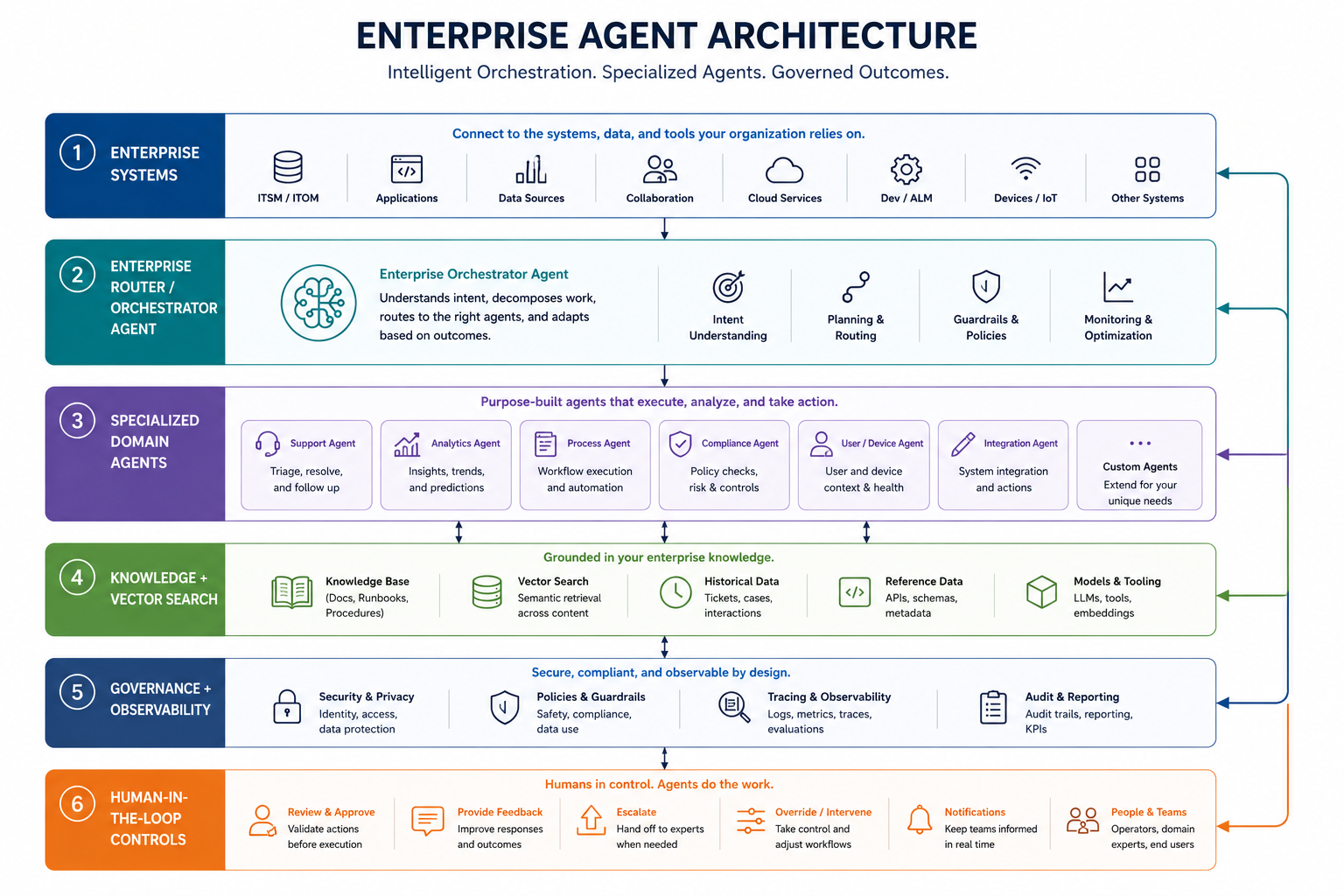
Poorly designed agents, the kind that emerge from citizen development or shadow IT, will attempt any workflow you assign them, regardless of whether they find the right data or apply the correct business logic. But you’ve already specified the right data and correct business logic: they’re embedded in your core applications. We refactor those applications so data access is exposed through APIs and business logic through services, then wrap them with an MCP server. The result is a standardized, discoverable set of tools that agents can compose into flexible workflows.

Agents can only act on systems they can call

70% of Fortune 500 companies still run software more than 20 years old, and 60 to 80% of enterprise IT budgets go to maintaining legacy systems — leaving 20 to 40% for everything new, including AI. Roughly 42% of developer time is lost to technical debt, about two days a week.

Meanwhile 41% of software organizations have MCP in production. The other 59% are largely blocked, because their systems aren’t exposable yet. No API means no agent action, and AI ROI stays bounded by the accessibility of your core applications.

The blocking issue is not the AI model. It is that the value inside your custom applications is locked away from agents.

A governed agent tool layer

OpenAPI-documented capabilities

Every exposed capability gets a machine-readable OpenAPI 3.x specification — the artifact LLMs actually use to select the right tool.

Hosted MCP servers

A remote MCP server implementing an OAuth 2.1 resource-server contract, with runtime and public or private exposure paths selected from your transport, session, scale, and network requirements.

Composable by design

Modular, multigrained services that agents and multi-agent systems can discover, compose, and sequence dynamically — the architecture Gartner recommends for agentic AI readiness.

Bounded by domain and trust

Typed tools grouped by business capability and blast radius, rather than blindly mirroring every endpoint you happen to have.

Governed at the tool boundary

Run-as-user or scoped workload identity, rate limits, attributable access events, and evidence for every material action.

Policy-gated side effects

The tool boundary enforces authorization and risk-based approval. Consequential actions can require human review before they execute.

The estate no vendor will ship an MCP server for

Custom monoliths

.NET and Java line-of-business applications: Strangler Fig facade, then composable services, then MCP server.

Legacy internal APIs

SOAP and WSDL services: SOAP-to-REST adapter, then OpenAPI, then MCP server.

Custom and legacy databases

Read-only SQL endpoint with row-level security, then OpenAPI, then MCP server.

Batch and file-based systems

Event-driven wrapper exposing asynchronous MCP tools that agents can call and poll safely.

Homegrown internal platforms

Knowledge-graph or schema-resolver layer with typed tools over an undocumented data model.

What this engagement owns

  • APIs, MCP servers, schemas, gateways, authorization, rate limits, and idempotency
  • Enforcement of approved action and approval policy at the tool boundary
  • Tool-access telemetry and material action events

What sits elsewhere

The consuming agents, guardrails, and humans in the loops (HITL) are defined in the projects below.

Where it goes next

AI Agent Factory composes these tools into agent workflows. AgentOps Governance monitors how the tools are used and operates the oversight, incident, and evidence processes around them.

Delivery approach

1. Portfolio inventory and prioritization

Rank integration targets by agent impact, implementation complexity, and data sensitivity, so the first capability delivered is the one that unblocks the most.

2. Capability and trust-boundary design

Group capabilities by business domain and blast radius, and define the typed tool contracts before any code is written.

3. API and OAuth layer

Build the API surface and the OAuth 2.1 resource-server contract, including the discovery endpoints that Cognito and Entra ID do not emit natively.

4. MCP server implementation

One or more bounded servers per domain and trust boundary, registered in your approved tool catalog with descriptions tuned for reliable selection.

5. Agent integration testing

Validate that tools work inside real agent loops, not just as standalone APIs that pass a Postman collection.

6. Security assessment and handover

OWASP MCP Top 10 assessment with control mapping, plus a runbook for adding tools, rotating credentials, and monitoring access logs.

The 27Global Difference

The honest truth about effort: if an application already has APIs, the tool plumbing is the easy part. The real modernization work is the OAuth layer a hosted MCP server requires — often a new ancillary auth service, since Cognito and Entra ID don’t emit MCP discovery endpoints natively.

We have built the hard part in production

Most integrators discover the OAuth 2.1 resource-server requirement mid-project, after the estimate is committed. We scope it on day one because we have already built it.

Incremental, with no big-bang cutover

One bounded capability at a time, with staged cutovers and rollback at every step. Your system of record keeps running and stays the system of record.

Security-first at the tool boundary

Every delivered MCP server and gateway configuration is assessed against the OWASP MCP Top 10, with findings and control mapping handed over.

Tested in real agent loops

A tool that passes an API test can still be unusable by an agent. We validate tool selection and composition inside actual agent runs before we call it done.

MCP reached 9,652 active public servers in May 2026, and every major AI provider now supports it. The platform vendors are covering their own products. Your custom applications still need a governed capability layer, and that is exactly what we build.

Ready to make your applications agent-callable?

Governed MCP services in 4 to 32 weeks.

Contact us today

News & Blog

The latest news, advancements and trends in software development.

Interested in a career in software development?